
"Ethiopian green beans"
1000 article(s) found

Introduction to the characteristics of Ethiopian Bancimagi Coffee Flavor Manor
In February 1977, Lieutenant Colonel Mengistu Haier Maryam (MENGISTU HAILE MARIAM) launched a military coup and served as Chairman of the interim military Administrative Council and head of State. In 1979, the Ethiopian Labor people's Party Organization Committee, dominated by soldiers, was established to implement an one-party system. In 1984, the Ethiopian Workers' Party was formed according to the Soviet Communist Party model. Mengistu, September 1987
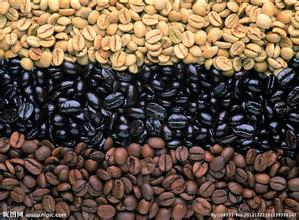
Introduction to the origin and characteristics of Ethiopian coffee, Yega Xuefei
The coffee producing areas of Ethiopia are Sidamo, Harald and Sidamo, Harrar and Yirgacheffe. Sidamo and Harrar are provinces and divisions. Sidamo is located in the south of Ethiopia bordering Kenya, and Harrar borders Somalia in the east of Ethiopia. Although Yirgacheffe is a community in the Sidamo region, due to soil composition and water content and other reasons.

Ethiopian Sidamo boutique coffee detailed description of Sidamo flavor, historical origin
Sidamo grows in the southernmost Ethiopian plateau between 4600 and 7200 feet above sea level (Sidamo province). It is a famous boutique coffee area in southern Ethiopia, bordering Kenya, southeast of Gemma, just south of the capital, usually sweet and loved by most people. its annual output is about 225000 bags / 60kg, with a smaller bean body than Longberry, with gray in the green, in Sidamo.

Introduction to the honey-like sweet aroma of Ethiopia's Yega Sheffield Adorto Coffee Flavor Manor
In February 1977, Lieutenant Colonel Mengistu Haier Maryam (MENGISTU HAILE MARIAM) launched a military coup and served as Chairman of the interim military Administrative Council and head of State. In 1979, the Ethiopian Labor people's Party Organization Committee, dominated by soldiers, was established to implement an one-party system. In 1984, the Ethiopian Workers' Party was formed according to the Soviet Communist Party model. Mengistu, September 1987

Ethiopian coffee only needs to be introduced in the producing area.
The coffee producing areas of Ethiopia are Sidamo, Harald and Sidamo, Harrar and Yirgacheffe. Sidamo and Harrar are provinces and divisions. Sidamo is located in the south of Ethiopia bordering Kenya, and Harrar borders Somalia in the east of Ethiopia. Although Yirgacheffe is a community in the Sidamo region, due to soil composition and water content and other reasons.

Ethiopian coffee beans G1 and G2 are just different in the number of defective beans.
Ethiopian coffee beans G1 and G2 are just different in the number of defective beans? the characteristics of the variety introduce that defective beans are an important factor that destroys the flavor of the final coffee. Therefore, defective beans should also be removed in the last step of raw bean processing. This has the problem of the number of defective beans, so according to the proportion of defective beans, supplemented by the size of the screen is also a way of classification. Due to the trend of boutique coffee

Ethiopia where coffee beans are produced Brand flavor Manor production area introduction
Ethiopian coffee grows in the plateau of western Ethiopia at an altitude of 4900-5900 feet (Wollega Province), north of Jima. Most of it is wild, with an annual yield of about 500000bags/60kg. Most of the exports are G5/G4. The beans are larger and longer than Longberry. The green color is a little brown. The taste is similar to jasmine tea. It is bitter, lacks the rising hala, slightly sour, and has a slight fruit fragrance and wine fragrance.

Introduction to the growing environment of Yega Xuefei Adoto coffee with excellent taste
Ethiopia is rectangular, with a ratio of length to width of 3:2. From top to bottom, it is composed of green, yellow and red parallel equal horizontal rectangles, with the national emblem in the middle of the flag. Since the end of the 19th century, Ethiopia began to use the green, yellow and red cross-striped national flag. In modern history, Ethiopia is the first African country to join the forest of free nations. [8] to this century
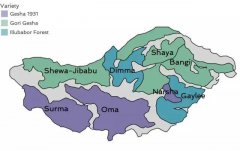
What is the difference between geisha and rose summer? what kind of rose summer does jade manor belong to? red mark, blue mark, green mark, purple mark
For professional baristas, please follow the coffee workshop (Wechat official account cafe_style). What's the difference between a geisha and Rosa? The same thing, pronounced from a Japanese geisha. What kind of Rose Summer is the Feicui Manor (La Esmeralda) usually divides its Rose Summer into three batches of red, green and blue marks. Some of the red bid lots are the competition of the Jadeite Manor.

Ethiopian Kocher Estate Coffee Flavor Taste Estate Features
Light Rail: On the morning of September 20, 2015, Addis Ababa Light Rail, the capital of Ethiopia, which was constructed by China Railway Corporation and provided operation and management services by Shenzhen Metro Group, was officially put into operation. Addis Ababa Light Rail Project consists of east-west line and north-south line. The planned main line of the project is about 75km long. The first phase of light rail project will be implemented this time, with the total length of main line of 31.048km(including 2.662km of common rail section).

Fresh and bright Kocher estate fine coffee beans variety planting market price profile
Yegashefi is a small town, 700- 21,000 meters above sea level, synonymous with Ethiopian fine coffee. It is a wetland since ancient times, and the old saying Yirga means to settle down, and Cheffe means wetland. The way coffee is produced and the flavor is so prominent that Ethiopian coffee farmers compete to be proud of their coffee with the flavor of Yegashfi, which has become Africa.

A brief introduction to the flavor and taste characteristics of Ethiopian Sidamo Chiso Coffee, which has the most unique flavor.
The biggest advantage of the area is that the soil fertility is maintained through the circulation of organic matter, using the withered leaves of the surrounding trees or the residual roots of the plants as fertilizer. Therefore, the coffee produced in cities and towns has obvious differences and characteristics. In 2010-2012, it continuously obtained the high score of CR92~94, the authoritative coffee evaluation website in the United States. Thus it can be seen that the raw beans in this area are extraordinary and rare.

Which kind of Ethiopian coffee is good? is Heirloom the best variety in Ethiopia?
Professional coffee knowledge exchange more coffee bean information please follow the coffee workshop (Wechat official account cafe_style) front street-Heirloom coffee introduction at the beginning of the coffee, I know that there are Tibica and bourbon two big beans, and then slowly mutate, crossbred Kaddura, Kaduai, and other various varieties, however, in recent years often appear native species

A brief introduction to the Market Price of Fine Coffee Bean varieties in Cochell Manor
Yega Xuefei is a small town, 700-21000 meters above sea level, synonymous with Ethiopian boutique coffee. It has been a wetland since ancient times. The ancient saying "Yirga" means to settle down and "Cheffe" means a wetland. The mode of production and flavor of coffee here are so outstanding that Ethiopian coffee farmers compete to take pride in the flavor of their coffee, and thus become Africa.

Introduction to the flavor and taste characteristics of Ethiopian coffee manor with rich alcohol thickness
The highest grades of Ethiopian washed coffee Yega Chuefei G1 G2 Sidamo (Yirgacheffe, Sidamo) are Grade 2 and Grade 3 (G2, G3), while most of the sun-processed coffee in eastern Ethiopia are Grade 4 or Grade 5 (G4, G5). In many cases, level 4 coffee is marked as level 5 in order to reduce taxes. At present, the grading is not uniform and messy, because there is also sun processing.

Introduction to the flavor and taste characteristics of Ethiopian coffee manor with rich alcohol thickness
The highest grades of Ethiopian washed coffee Yega Chuefei G1 G2 Sidamo (Yirgacheffe, Sidamo) are Grade 2 and Grade 3 (G2, G3), while most of the sun-processed coffee in eastern Ethiopia are Grade 4 or Grade 5 (G4, G5). In many cases, level 4 coffee is marked as level 5 in order to reduce taxes. At present, the grading is not uniform and messy, because there is also sun processing.

A brief introduction to the cultivation of boutique coffee beans in Cochell Manor, geographical location, climate and altitude
Yega Xuefei is a small town, 700-21000 meters above sea level, synonymous with Ethiopian boutique coffee. It has been a wetland since ancient times. The ancient saying "Yirga" means to settle down and "Cheffe" means a wetland. The mode of production and flavor of coffee here are so outstanding that Ethiopian coffee farmers compete to take pride in the flavor of their coffee, and thus become Africa.

The difference between the Origin and graded bidding of Rosy Village Manor and Gold bid, Red Standard and Green Standard Chaka batches of Rosa Coffee beans
The internal classification of Rosa Village: competitive bidding, gold bid, red bid, green bid, Chaka batch Rose summer how to distinguish? Even in the top estates, there are differences in the quality of the coffee produced. In order to live up to the famous flavor of Ruoxia Village, a strict grading system has been implemented within the village. Bidding batches only account for roses.

Flavor description of Ethiopian Coffee beans introduction to Grinding scale of varieties in producing areas
Grade of Ethiopian coffee: Ethiopian washed coffee Yega Chuefei G1 G2 Sidamo (Yirgacheffe, Sidamo) has the highest grades 2 and 3 (G2, G3), while sun-processed coffee in eastern Ethiopia is mostly grade 4 or 5 (G4, G5). In many cases, level 4 coffee is marked as level 5 in order to reduce taxes. At present, the classification is not uniform and there are

Ethiopian Arabica coffee with rich body Original growing environment Fine coffee
The highest grades of washed Ethiopian coffee Yirgacheffe G1 G2 Sidamo are Grade 2 and Grade 3 (G2, G3), and the coffee processed in the sun in eastern Ethiopia is mostly Grade 4 or Grade 5 (G4, G5). In many cases, fourth-grade coffee is labeled as five-grade in order to reduce taxes. Now the classification is not very uniform, some chaos, because there are sun processing